Saline water desalination has become progressively significant in bone-dry inland districts for solid water supplies, however the administration of desalination brackish water squander is exorbitant. Specifically, the presence of oversaturated calcium as scale-framing compounds in the brackish water is trying to removal.
This study explored the impacts of three generally utilized antiscalants, i.e., nitrilotri-methylenephosphonic corrosive (NTMP), ethylenediaminetetra-methylenephosphonic corrosive (EDTMP) and diethylenetriaminepentakis-methylphosphonic corrosive (DTPMP) on the precipitation of calcium from arrangements under substance conditions applicable to bitter desalination brackish water, with an accentuation on the nucleation and precipitation of three calcium-containing solids including hydroxyapatite Ca5(PO4)3OH(s), gypsum CaSO4(s), and vaterite CaCO3(s).
The nucleation rates and actuation energy of nucleation were explored interestingly for hydroxyapatite pertinent to a desalination concentrate. Results showed that every one of the three antiscalants displayed remarkably time-subordinate impacts on the restraint of calcium strong development.
The precipitation energy displayed a three-stage conduct, with an acceptance stage, a quick response stage, and a last balance stage. The viability of antiscalant in deferring calcium precipitation and dialing back the pace of precipitation followed the request for DTPMP > EDTMP > NTMP. Antiscalants adsorb on the cores of calcium solids and restrain the precious stone development process. Actuation energy of nucleation expanded directly with antiscalant dose, however it diminished as the system changed from homogeneous to heterogeneous nucleation. This study created essential data on the precipitation energy of calcium solids within the sight of phosphonate-containing antiscalants and advances the improvement of desalination saline solution the executives systems.
(Visit or Contact Essence Chem at our location or at www.essencechem.co.za for more information on the subject)
Electrochemistry Under Equilibrium Conditions: Potentiometric Titrations
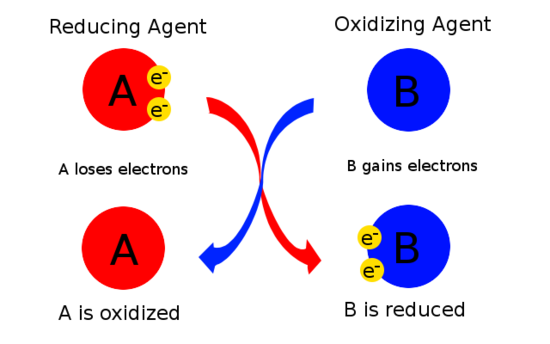
The decrease capability of a redox not entirely settled by recording the proportion [Ox]/[Red], in the wake of permitting the framework to equilibrate with the cathode at various possibilities.
The potential is generally fluctuated by over and over adding modest quantities of an oxidant or a reductant. Not at all like little atoms, protein redox focuses don't for the most part respond quickly with the estimating anode and harmony isn't laid out rapidly. To beat this issue, little redox specialists called arbiters are added to the answer for transport electrons between the dynamic site and the anode. For best outcomes, these ought to have decrease possibilities near that of the dynamic site being contemplated; combinations of arbiters are regularly utilized to cover a wide reach. A short rundown of go betweens and their decrease possibilities is given in Table 8.1. See additionally ref. Wardman (1989).
Contact us at Essence Chem for more information on this subject, or feel free to visit www.essencechem.co.za